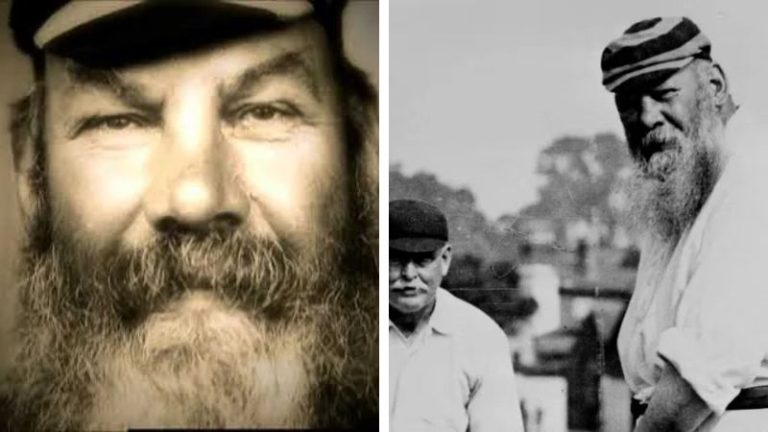
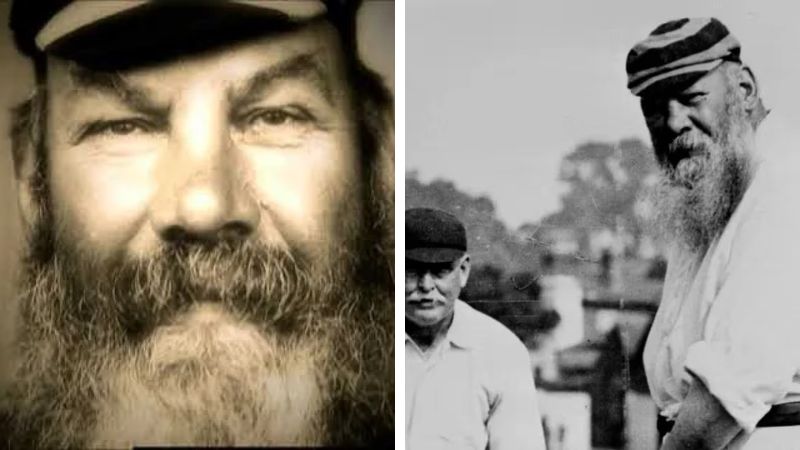
Cricket has produced many legendary players, but only a few have influenced the sport beyond their individual performances. One such personality is W.G. Grace, whose contribution helped shape modern cricket.
If you are searching for who is the godfather of cricket, W.G. Grace is commonly cited in the historical context. He is widely regarded as the Father of Modern Cricket for his influence on batting techniques and the popularity of the game. However, in India, former captain Sourav Ganguly is often called the Godfather of Indian Cricket because of his leadership and contribution to the national team.
Let’s look at their achievements and understand why these cricketers hold such important places in cricket history.
Who is the Godfather of Cricket?
William Gilbert Grace, popularly known as W.G. Grace, is one of the most influential personalities in cricket history. Born on 18 April 1848 in England, he played a major role in developing the sport during the 19th century.
Grace played first-class cricket for 44 seasons, from 1865 to 1908. His career statistics include:
| Achievement | Record |
| First-class matches | 870 |
| First-class runs | 54,211 |
| First-class centuries | 124 |
| Highest first-class score | 344 |
| First-class wickets | 2,809 |
| Test matches | 22 |
| Test runs | 1,098 |
He made his Test debut against Australia in 1880, scoring 152 runs and becoming the first player to score a Test century.
Although W.G. Grace is commonly associated with the Godfather of Cricket title, the more established historical description is the Father of Modern Cricket. The ICC does not officially award the title Godfather of Cricket.
Who Was W.G. Grace? Early Life and Cricket Career
W.G. Grace was born in Downend, near Bristol, England. He grew up in a cricket-loving family, and his father, Henry Mills Grace, encouraged his children to participate in sports. His brothers also played cricket.
Grace developed an interest in the game at an early age. His natural ability, regular practice and understanding of batting helped him become one of England’s most recognised cricketers.
He made his first-class debut in 1865 and represented teams such as Gloucestershire and Marylebone Cricket Club (MCC). His international career began in 1880 when he played his first Test match against Australia.
He continued representing England until 1899 and played first-class cricket until 1908. His long career and consistent performances established him as a pioneer of modern cricket.
Why Is W.G. Grace Called the Father of Modern Cricket?
W.G. Grace earned this recognition because of his contribution to batting techniques and the development of cricket during the 19th century.
Contribution to Batting Techniques
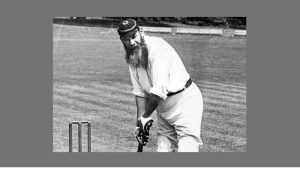
Grace combined defensive batting with attacking strokes. He used both front-foot and back-foot techniques effectively, adapting his approach according to the delivery.
His batting demonstrated that players could combine patience, technique and attacking ability. His methods influenced future generations of batsmen.
Role in Popularising Cricket
Grace became one of the earliest sporting celebrities in England. Large crowds attended matches to watch him play, and his name regularly appeared in newspapers and sporting discussions.
During the Victorian period, cricket was becoming an important part of British sporting culture. His popularity helped attract greater public attention to first-class cricket.
Major Career Achievements
Some of his most notable achievements include:
- Scored 54,211 first-class runs.
- Recorded 124 first-class centuries.
- Took 2,809 first-class wickets.
- Scored 344 runs in a first-class innings against Kent in 1876.
- Became the first player to score a Test century.
- Played first-class cricket for 44 seasons.
His achievements as a batsman and bowler made him one of the most remarkable all-round cricketers of his generation.
Who is the Godfather of Indian Cricket?
Sourav Ganguly is popularly known as the Godfather of Indian Cricket because of his contribution as captain and his role in building a competitive Indian team.
Ganguly became India’s captain in 2000. During his leadership, he encouraged young players, supported emerging talent and helped the team develop confidence in international cricket.
Players such as Yuvraj Singh, Virender Sehwag, Harbhajan Singh and Zaheer Khan became important members of the Indian team during his captaincy.
One of his most memorable achievements was leading India to the 2003 Cricket World Cup final. He also captained India to victory in the 2002 NatWest Series final against England at Lord’s.
C.K. Nayudu: The First Test Captain of India
C.K. Nayudu, whose full name was Cottari Kanakaiya Nayudu, was India’s first Test captain. He led the country in its first Test match against England at Lord’s in June 1932.
He was known for his aggressive batting and powerful hitting. His leadership marked the beginning of India’s journey in international Test cricket.
The BCCI’s Col. C.K. Nayudu Lifetime Achievement Award is named in his honour, recognising his contribution to Indian cricket.
Other Legendary Cricketers Who Influenced the Game
Several other players have made important contributions to cricket through their records, leadership and performances.
Sir Donald Bradman
Sir Donald Bradman is widely regarded as one of the greatest batsmen in cricket history. He played 52 Test matches for Australia, scoring 6,996 runs at an average of 99.94.
His Test batting average remains unmatched and is one of the most remarkable records in cricket.
Sachin Tendulkar
Sachin Tendulkar is popularly known as the God of Cricket. He represented India from 1989 to 2013 and became the first cricketer to score 100 international centuries.
His major achievements include 15,921 Test runs, 18,426 ODI runs and membership of India’s 2011 Cricket World Cup-winning team.
Kapil Dev
Kapil Dev captained India to its first Cricket World Cup victory in 1983. He was also an exceptional all-rounder, scoring 5,248 Test runs and taking 434 Test wickets.
His contribution helped establish India as a serious competitor in international cricket.
Sir Garfield Sobers
Sir Garfield Sobers was one of the finest all-rounders in cricket history. He scored 8,032 runs and took 235 wickets in 93 Test matches for the West Indies.
In 1968, he became the first batsman to hit six sixes in an over in first-class cricket.
The Godfather, Father and God of Cricket
These cricket titles are often confused, but each refers to a different personality and contribution.
| Popular title | Cricketer | Reason |
| Father of Modern Cricket | W.G. Grace | Influence on cricket’s development |
| Godfather of Cricket | W.G. Grace | Contribution to early modern cricket |
| Godfather of Indian Cricket | Sourav Ganguly | Leadership and team development |
| God of Cricket | Sachin Tendulkar | International records and achievements |
| First Test Captain of India | C.K. Nayudu | Led India’s first Test team |
Wrapping Up
W.G. Grace remains one of the most influential personalities in cricket history. His contribution to batting techniques, first-class cricket and the popularity of the sport earned him recognition as the Father of Modern Cricket.
If you are looking for who is the godfather of cricket, W.G. Grace is a commonly cited answer in the historical context. However, Sourav Ganguly is associated with the title in Indian cricket, while Sachin Tendulkar is celebrated as the God of Cricket. Each has made a distinct contribution to the sport.
Frequently Asked Questions (FAQs)
Q1. Who is the godfather of cricket in the world?
W.G. Grace is commonly associated with the title in the historical context. He is better known as the Father of Modern Cricket because of his contribution to batting and the development of the sport.
Q2. Why is W.G. Grace called the father of modern cricket?
W.G. Grace influenced batting techniques, helped popularise cricket and played an important role in the development of the sport during the 19th century.
Q3. Who is the godfather of Indian cricket?
Sourav Ganguly is popularly known as the Godfather of Indian Cricket because of his leadership and contribution to building a competitive Indian team.
Q4. Who is known as the God of Cricket?
Sachin Tendulkar is known as the God of Cricket. He holds the record for 100 international centuries.
Q5. What was W.G. Grace’s highest first-class score?
W.G. Grace’s highest first-class score was 344 runs, which he scored against Kent in 1876.
Q6. Who was the first captain of the Indian cricket team?
C.K. Nayudu was India’s first Test captain. He led the team against England in its first Test match in 1932.
Q7. Is the Godfather of Cricket an official ICC title?
No. The ICC does not officially award this title. It is an informal expression used by cricket followers to describe influential players.
About the Author